


You have felt it before, even if you have never had a name for it.
It is the sensation of needing something to happen: a specific outcome, a particular response, a certain version of the future; and feeling your entire sense of happiness and well-being hinge on whether it does. The waiting. The checking. The quiet rehearsal of how you will feel if it goes well, and the equally quiet rehearsal of how you will feel if it doesn’t. And underneath all of it, the unsettling discovery that something as small as an unanswered message or a delayed decision can shrink your whole world down to the size of that one unresolved thing.
You may not have called it anything. It may simply have felt like caring, or being responsible, or wanting things to go right. It may have felt completely reasonable, because often, it is. The outcome matters. The goal is real. The desire is genuine.
And yet somewhere in the caring, something tightens. The wanting becomes watching. The watching becomes managing. That is, you pay close attention to an outcome you care about, you stop just observing and start trying to intervene. You begin adjusting your behaviour to influence the result: following up when you said you wouldn’t, softening a boundary you had set, refreshing the page one more time, engineering the conversation slightly differently than you would have if you weren’t so invested. The managing becomes exhausting. And at some point you find yourself spending more energy trying to control how things unfold than actually living the life you are trying to build.
That managing, that tightening, that invisible grip around outcomes — is what this article is about.
It is simply a pattern worth understanding, because understanding it is precisely what begins to loosen it.
I am not going to hand you an instruction and wish you luck with it.
I am going to show you something more useful: what freedom from that tightening grip actually is, and perhaps more importantly, what it is not. Because the most common version of this teaching skips straight to the prescription without ever explaining the mechanism. And an instruction without understanding is just another thing to try and feel you failed at.
The grasping, the controlling, the anxious monitoring of outcomes — these are not character flaws. They are strategies. They were learned, usually early, in response to an environment where outcomes genuinely were uncertain and unpredictable, where love felt conditional, where things did not always work out and no one explained why. The clinging was, at one point, entirely reasonable. It was the mind doing what minds do, that is, trying to create safety in an unsafe-feeling world.
The problem is not that you learned to hold on tightly. The problem is that you never learned you were allowed to put it down.
The Difference Between Indifference and Freedom
Most people, when they first encounter the idea of loosening that grip, hear it as an instruction to stop caring. It doesn’t make sense to them. That misunderstanding is worth addressing directly, because it is the reason so many people try this and feel they’ve failed.
The word most often used for this loosening is detachment. And that word, for many people, immediately conjures the wrong image — someone who has gone cold, who no longer feels, who has retreated behind a wall of carefully managed indifference. That is not what we are talking about here.
When people hear “be free from outcomes,” many hear “stop caring.” And so they try; they perform a kind of emotional distance, a careful coolness about the things they want, a studied nonchalance that they hope will look like spiritual maturity. They say “whatever happens, happens” while quietly terrified it will happen wrong. They pretend the goal doesn’t matter while secretly tracking every development with the precision of an air traffic controller.
This is not freedom. This is suppression with better vocabulary.
Genuine freedom from outcomes is not a reduction of caring. It is an expansion of trust. The person who has truly released attachment to outcomes has not stopped wanting; they have stopped needing things to arrive in a specific form in order to feel safe. They are fully invested in their direction, fully committed to their efforts, fully alive to their desires — and at the same time, genuinely at peace with the path that unfolds.
Think of an archer. The committed archer cares deeply about the target. She studies it, adjusts her stance, breathes deliberately, and draws the bow with everything she has. In the moment of release, she is completely invested. But once the arrow leaves her fingers, she does not chase it. She does not run after it, trying to redirect it mid-flight. She does not grip the air where it was. She releases, and she watches, and she trusts that what she gave to the draw was enough — and that if the arrow misses, she will draw again.
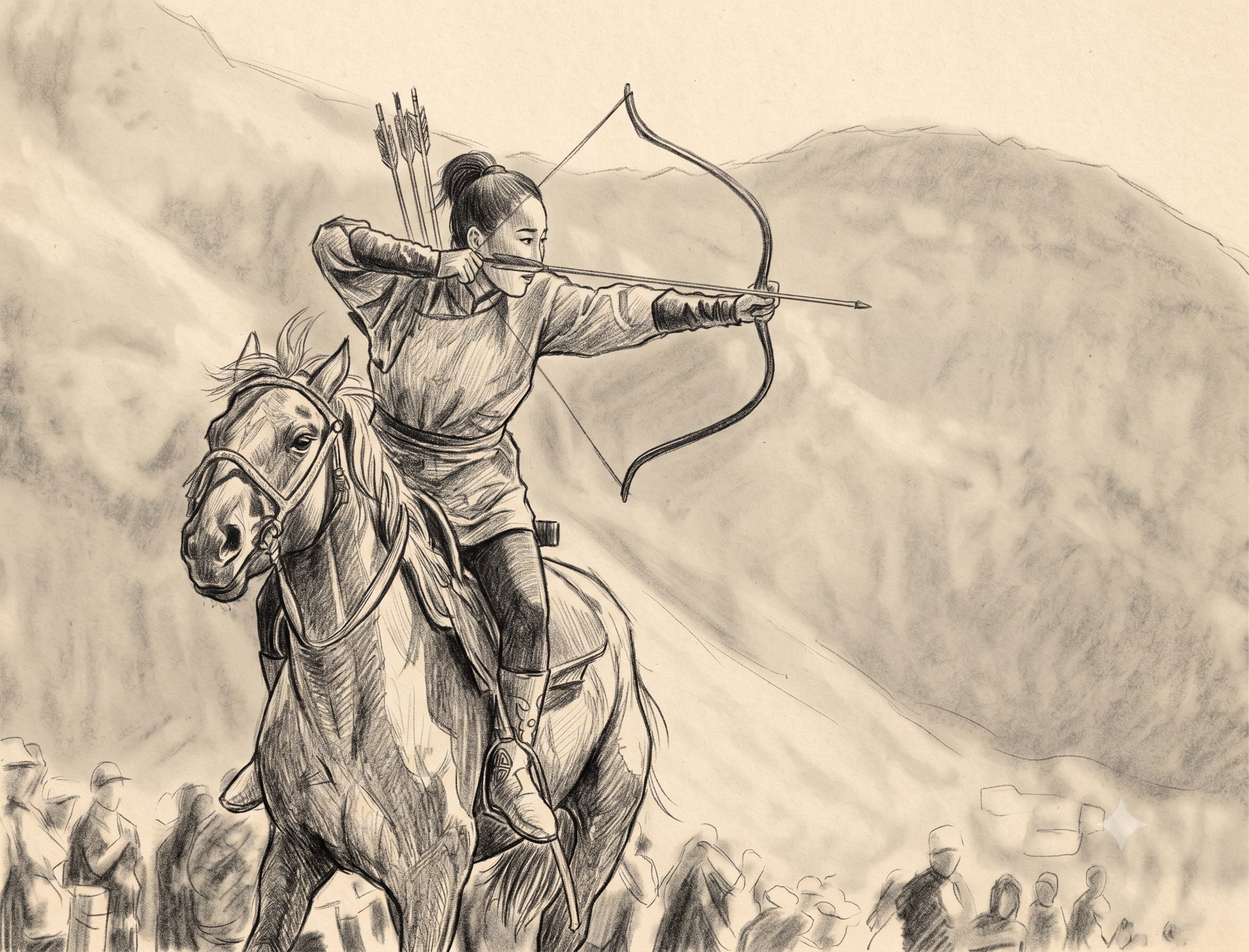
The release is not indifference. It is the completion of the effort.
This is what freedom from outcomes actually looks like. Not the absence of desire, but the absence of the compulsive need to control what happens after you’ve given everything you have to give.
Eckhart Tolle points to something that makes this possible at a deeper level. Most of our grip on outcomes, he teaches, comes from a confusion between being and having — between who we are and what we accomplish or acquire. When identity is quietly staked on the outcome, releasing it feels like losing something essential. Of course the fist stays closed. It believes it is holding itself together.
But when a person is rooted in being, in the simple, steady awareness of who they are beneath what they achieve, outcomes lose that existential weight. They still matter. The archer still cares where the arrow lands. But the release is no longer a risk to the self. This is what Tolle calls surrender, and he is careful to separate it from passivity. Passivity withholds effort. Surrender completes it. The surrendered person has given everything available to them to the present moment, and then, from a place of wholeness rather than need, released their grip on what happens next.
Why Attachment Blocks the Very Thing You Want
Here is the uncomfortable paradox that no one explains clearly enough.
The tighter you hold an outcome, the more your energy signals need. And need, genuine, anxious, desperate need, has a particular quality that the world around you can detect and respond to, often in ways that work against you.
Consider what happens in any relationship when one person becomes quietly desperate for a specific response from the other. The need itself changes the dynamic. The person being needed can feel the weight of it: the subtle pressure to perform, to deliver, to be the source of someone else’s happiness or joy. And that pressure, more often than not, produces the opposite of the desired response. People pull away from need. They are drawn toward ease.
The same principle operates beyond relationships, in the broader field of how opportunities, circumstances, and experiences find their way to you.
When you are attached to a specific outcome, you are, in effect, operating from the belief that you are not okay until that outcome arrives. And operating from “not okay” has consequences. It narrows your attention to the one thing you’re waiting for, making you blind to the adjacent possibilities that might actually serve you better. It colours every interaction with a faint but detectable urgency. It causes you to interpret neutral events as threatening, because anything that doesn’t confirm the outcome you need starts to feel like evidence that it isn’t coming.
Attachment is, at its root, a form of fear. And fear contracts. It closes off. It makes the world smaller.
Freedom, on the other hand, expands. When you are genuinely at peace with how things unfold, you become more present, more open, more naturally attractive to the people and circumstances around you. You stop projecting need and start projecting availability. You stop trying to force the one door and start noticing all the others.
The goal doesn’t change. What changes is the quality of energy you bring to pursuing it.
Think about the last time you were caught in traffic that wasn’t moving.
Most people, in that situation, do one of two things. They lock onto the plan — the route they decided on, the time they were supposed to arrive — and they fight. They inch toward the lane that looks slightly faster. They take the exit they know isn’t really better, just to feel like they’re doing something. They grip the wheel a little tighter with every passing minute, as though willpower alone might move the cars ahead of them. They arrive, eventually, tense, depleted, and somehow feeling that the journey went wrong, even if they got there.
Or they don’t.
Some drivers, faced with the same gridlock, make a different choice — not about the route, but about their relationship to it. They know where they are going. They are still moving toward it with intention. But they have learned something about traffic: it has its own intelligence. The lane that looked slower sometimes clears first. The detour the GPS suggests at the last moment sometimes shaves twenty minutes off the journey. The unexpected stop sometimes puts you exactly where you needed to be, at exactly the right moment, for reasons you only understand later.
These drivers arrive at the same destination, but they arrive differently. Still themselves. Still present. Rested in a way the first driver never was.
The destination didn’t change. The traffic didn’t change. What changed was the quality of relationship each driver had with the parts of the journey they could not control.
This is what freedom from outcomes makes possible. Not a passive drift through life, but an active, alive, intentional engagement with it; one that holds the destination clearly while remaining genuinely open to the path that actually wants to take you there.
Trust Is Not Naive. It Is Structural.
There is a particular kind of intelligence in the statement: I trust that things work out for my highest good, even when I can’t see how.
Note what it does not say. It does not say things always feel good. It does not say the path will be smooth, or that the outcome will match what you originally pictured. It does not require you to pretend that loss isn’t loss, or that disappointment isn’t real.
What it asserts is structural: that underneath the visible surface of events, something is working toward your growth and your good — even in the circumstances that, from the inside, feel like obstruction or failure.
This is not blind optimism. Blind optimism requires you to deny what is actually happening. Trust of this kind requires something more demanding: that you stay present with exactly what is happening, feel it fully, and simultaneously hold the possibility that its meaning is not yet fully visible.
Consider what happens to a seed in the ground. From the seed’s outside perspective, if seeds had perspectives, nothing is happening. There is darkness, pressure, moisture, and waiting. There is no evidence of progress. There is no indication that anything is working. And yet the entire process of becoming a tree is underway, invisible and entirely on schedule.
Many of the most transformative periods of a human life look, from the inside, exactly like that: dark, pressured, and apparently stuck. The relationship that ended cleared space for the one that changed everything. The job that fell through redirected energy toward work that actually mattered. The failure that felt definitive was, it turned out, the precise pressure required to crack open the next version of who you were becoming.
This is what trust makes available — not the guarantee that things will look the way you wanted, but the capacity to remain open when they don’t, and to keep moving toward what calls you rather than collapsing into what has passed.
Trust is what allows you to put down the weight of having to control the outcome in order to feel safe. And putting down that weight, truly, not performatively, is the beginning of genuine freedom.
What Freedom Actually Feels Like
It is worth describing this clearly, because freedom from attachment is often presented in abstract language that is difficult to locate in real experience.
Genuine freedom from outcomes does not feel like not caring. It feels like caring from a different place. From groundedness rather than need. From wholeness rather than lack. From confidence in the direction rather than anxiety about the destination.
It feels like being able to make the call, send the proposal, have the conversation, put the work into the world, and then genuinely turn your attention to something else. Not because you have trained yourself to suppress the wanting, but because you have discovered, somewhere along the way, that your happiness or joy is not actually contingent on the response.
It feels like being able to hear “no” without it collapsing into a verdict about your worth.
It feels like being able to receive “yes” without immediately scanning for everything that could go wrong.
It feels like being able to pursue something with full commitment and full presence, without the background hum of anxiety that comes from needing it to work out in a specific way in order for you to be alright.
Freedom is not the absence of desire. It is the absence of the desperate relationship with desire; the compulsive checking, monitoring, and controlling that exhausts you and contracts the very field of possibility you are trying to expand, is gone.
When you are free in this way, you become, paradoxically, more effective. Because effort that comes from wholeness is a different quality of effort than effort that comes from fear. It is cleaner, more creative, more naturally aligned with the people and circumstances that can actually help you.
The energy you were spending on control becomes available for everything else: for creativity, for presence, for the kind of engaged, open attention that actually draws good things toward you.
The Practice of Genuine Release
So how does one actually arrive at genuine release, not as a philosophy held at arm’s length, but as a living, breathing way of moving through one’s days?
It begins with getting honest about what you are actually holding and why.
Most attachment is not really about the outcome itself. It is about what you believe the outcome will prove. The job offer proves you are capable. The relationship proves you are lovable. The financial milestone proves you are safe. The recognition proves you are enough. When you can see this clearly and name the belief that has birthed the attachment, you can begin to work at its root.
Because what that work reveals, consistently, is this: the thing you were trying to prove is already true. Your capability is not created by the job offer. Your lovability is not contingent on the relationship arriving. Your enoughness was never something an outcome could bestow — and was therefore never something an outcome could take away.
Freedom begins in the recognition that what you were seeking through the outcome was never available in the outcome to begin with.
Once you see that, something softens. The desire may not disappear, but the desperate urgency beneath it has lost its foundation. You can still want the thing. You can still move toward it with everything you have. But you are no longer chained to it. You are no longer defining your wellbeing by its arrival or absence.
That is not indifference. It is not spiritual bypassing. It is the real thing.
It is, simply and entirely, what it means to be free.
In Closing: The Open Hand
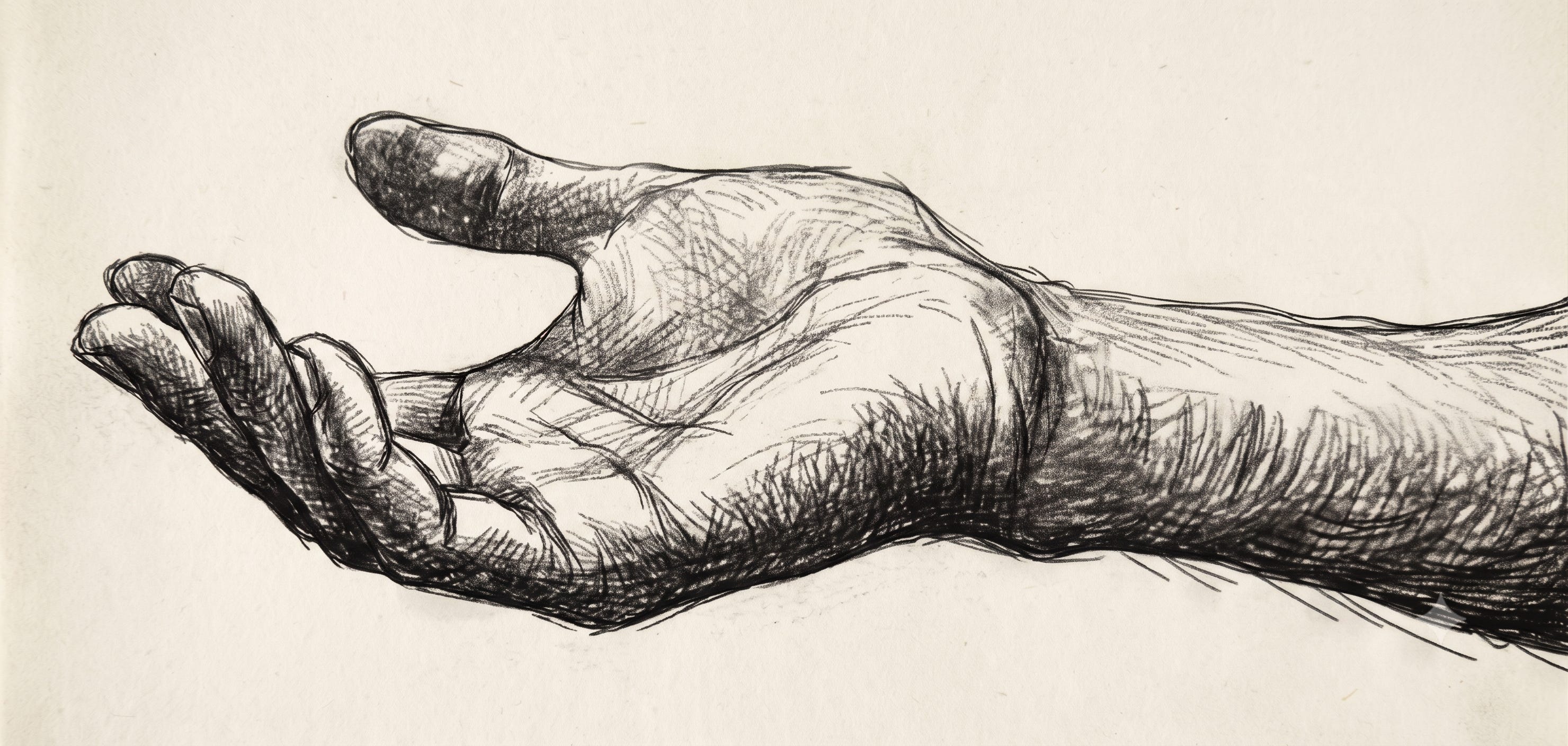
There is an image worth carrying with you from this.
A closed fist can hold what it has, but it cannot receive anything new. It is defended, protected, braced — but it is also, necessarily, shut.
An open hand loses nothing it was genuinely meant to hold. What belongs to it rests there easily. But it remains available. It can receive. It can let pass what was never meant to stay. It moves through the world with a quality of readiness that the fist, for all its grip strength, can never access.
Your relationship with your goals, your desires, your outcomes can be a fist or a hand. You can hold what you most want in a grip so tight that the wanting itself becomes the obstacle. Or you can hold it the way you hold something precious and fragile — with attention, with care, with full presence, and with the quiet understanding that how it arrives is not entirely yours to control.
The open hand is not passive. It is the most engaged, most present, most alive posture available to a human being who is genuinely in motion toward what calls them.
You set the intention. You give the effort. You stay true to the direction.
And then, and this is the part that changes everything, you release the arrow.
Not because you don’t care where it lands.
Because you trust yourself enough to draw again.


